Recommendations: Communication and People Skills
Communication and People Skills
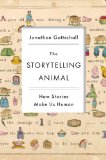 Jonathan Gottshcall discusses why stories are so pervasive in our lives, in a well written, compelling book that explores the science, history, and future of stories and storytelling. Among other things, the book covers why children and adults create and consume fiction, the science of dreams, the role of stories in influencing (and defining) history, and what technology means for the future of stories. Not just full of interesting facts, many chapters start out in the manner of a compelling story, drawing you into learning about the science and history of story telling, proving the point stories are a great way to learn. Many of my favorite technical books interlace stories with technical details. If you are curious about how the mind works, and in the science and role of stories, or even just want some great examples of how to use story to make a point, read this book. (This review is based on a pre-publication review copy).
Related books
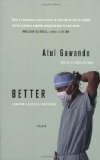 While Gawande stays clearly in the domain of medicine, there are lessons in this book to be learned by those working in any craft that combines technology, personal skill, and human interaction. Better is a good read for anyone seeking to understand performance and how important the individual and collaboration are in a profession one often thinks of as the being dominated by individual practitioners with highly specialized skills. What was especially interesting to me was how this book brought to mind parallels with what seems to be a vastly different practice: Software development. The stories of practice in rural India seemed to make a case for the value of "generalizing specialists," the discussion of infection prevention was an echo of the value (and difficulty) of getting a team to be disciplined in using a few simple practices. Almost every chapter found me making notes about parallels to software development. I suspect those in other fields that require both individual skills, judgement, and collaboration might find the same thing. This wasn't unexpected, as I had first read The Checklist Manifesto, but that book was explicit about the parallels. If you are interested in health care, want to understand how to apply skills more effectively, or simply just like a good story, Better is good, Gawande mixes anecdote, data, and an almost suspenseful presentation style to make what could be an academic discussion approachable and entertaining. For a more detailed review see my blog
Related books
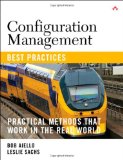 When I reviewed an early draft of this book I was pleased to see a book on SCM that wasn't just about tools and processes (though it covers those things) but also about people. SCM is about enabling people to work together effectively, and tools and processes are essential, but you need to use them with an understanding of how people work. This book covers not just version control but the range of CM activities from build to deployment, even covering hardware CM issues. While anyone who works with software may benefit from this book, those who manage teams and project or are looking to improve their SCM processes will find the approach especially useful.
Related books
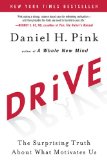 This is one of those books that describes something extremely obvious and intuitive that at the same time goes against what you were taught was "common sense." This would be a good book just for the survey of the (long) history of the study of the theory of motivation. It also concludes with a number of things you can do to create an environment that encourages mastery (as opposed to simply meeting goals) in your work and school. As an agile software developer I had a few aha! moments when you understand how agile practices really encourage flow and create environments where teams and individuals can be highly productive. As a parent, this book re-enforced that the way children approach learning and problems is something to be viewed with awe. If you're a manager, this book will encourage you to think about how teams work and how some common practices are counter-productive. It's a quick read that will get you thinking and learning.
 Related books
 If you thought that performance review processes and incentive systems are often flawed, but wanted to understand why, Austin's book will give you a model to understand dysfunctional measurement processes, and a path to understanding how to avoid the dysfunctions and really help organizations and teams perform in a way that improves quality and gives customers what they want. Though the core of this book is an economic model, the book is quite readable and enjoyable. While this book was written before many people had heard of agile or Scrum, the model in the book also helps you understand why the approach of self-organizing teams that agile methods advocate can be very effective. Many of the conclusions in this book seem like common sense, but like many things, common sense is not synonymous with common practice, especially among people want to measure things. If you manage people consider reading this book to get a deeper understanding about incentive systems in addition to Behind Closed Doors: Secrets of Great Management which will help you to learn how to effectively manage people day-to-day to improve performance
Related books
 Portfolio management sounds neither compelling nor agile, yet in this book Johanna Rothman explains not only the importance of portfolio management, but also how portfolio management and agile development approaches enable each other. By a combination of guidelines, stories, and references Rothman teaches you how to define a mission, prioritize your product development plan, and enable your organization to get more done while reducing technical debt, and enhancing flexibility. This is an approachable and engaging book that will appeal to project managers, technical leads, and anyone interested in understanding how to develop and execute a consistent project strategy.
Related books
 This is a book written by a surgeon, talking about how doctors, structural engineers, pilots and others use checklists to manage complexity and manage risk. While reading it, I kept thinking of all the things the scenarios he described has in common with software projects, and how the checklists reenforced the same values that agile software teams hold dear. Gawande illusrates how checklists help people be more creative, more productive and solve problems by allowing people to focus on the novel parts of a problem. What I especially liked was the recurring theme of how complex problems are best solved by teams and not heroic individuals, and how processes, like those guided by checklists can help foster teamwork. This is an easy to read book that helps you understand what all complex endeavors have in common, regardless of profession, and gives you one approach to managing this complexity. Read it if you want to understand how to write good checklists and use them effectively, and to address the negative perceptions colleagues have about processes and checklists.
Related books
 Teams often think about how to improve because they don't think that they have the time. Agile Project Retrospectives gives you the information you need to plan for a short, effective retrospective. The book isn't a replacement for a book like [[ASIN:0932633447 Project Retrospectives: A Handbook for Team Reviews]], but it can give someone interested in running a retrospective a good understanding of the goals, a framework of how to structure the retrospective, and a menu of exercises to apply at each phase. This book isn't magic; an effective retrospective takes thought and planning. But this book gives you the tools you need to facilitate an efficient and effective retrospective. Every project manager, scrum master, and technical leader should have a copy of this book. You'll not only want to read it; you will refer to it often.
Related books
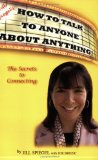 By stringing together anecdotes, exercises, and simple guidelines, Jill Speigel explains how to improve your communication style, and helps you learn how to address common problems like not knowing how to start a conversation, what to do when you forget a name, and how to deal with difficult people. Many of the points in the book seem simple and obvious, but they are also the things that we seem to forget most in our day to day interactions. Between the stories in the book, and Jill's writing style, it's hard not to put down the book feeling motivated and uplifted. You'll be able to read the book quickly, but will want to glance back at the sections that discuss issues that seem problematic. While there are other books that cover conversational style issues in more detail, you'll get a lot out of this quick read.
Related books
- What Every Body is Saying: An Ex-FBI Agent's Guide to Speed-Reading People
- Getting to Yes : Negotiating Agreement Without Giving In
- Getting Past No : Negotiating Your Way from Confrontation to Cooperation
- Communication Gaps and How to Close Them
- Behind Closed Doors: Secrets of Great Management
- Slack: Getting Past Burnout, Busywork, and the Myth of Total Efficiency
 This book contains descriptions of 86 common organizational behaviors described in a concise and entertaining way, using stories, guidelines, and metaphor. This approach makes it easy for you to identify with similar situations in your present or past organizations, and remember them. Managers, developers, and students of organizational behavior will enjoy reading this book and want a copy around for reference. Those with more experience will find that the patterns resonate with them, and those newer to software development will get an idea of what to expect in team dynamics. Like may great books, you'll have learned much from the experience of the authors while being entertained and amused.
Related books
 This is an excellent work that guided me though my first formal management experience. The book weaves its lessons into a story which helped you to understand how to apply what you learned. Like many important books, it explains some simple rules that can be difficult to execute in practice. The downside of reading this book is that you may realized that you're not being managed well (or have not been in the past) and you can no longer live in blissful ignorance. All technical managers at all levels should have read a copy of this book. The section on having one on ones by itself is worth the price.
 Related books
 A well written, entertaining, guide to tools and techniques to help you be a better engineer. While many of the examples are geared towards software developers, anyone who wants to learn how to use their time (and energy) more effectively will benefit from reading this book. This book is a great mix of background material to help you understand how you learn, resources to enable you to learn more, and techniques to help you practice right away. This book will be one I refer to often, and is a great companion to Getting Things Done, and Becoming a Technical Leader.
Related books
 This is an inspirational and practical book that will both help you be a better, more productive writer and make you want to write. Weinberg explains timeless techniques you can use to collect and organize your ideas effectively when you are writing about a topic you care about. Jerry Weinberg's books have had a positive influence on my life as a technologist and manager, and with this book, he is now inspiring me to be a better writer. If you are a writer, or want to be one, you will want to read this book once for inspiration, and refer to it again later for it's exercises and advice.
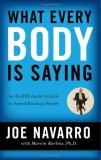 This book can not only help you to be more aware of when to probe further about whether what someone says is inconsistent with what they may be feeling, but it also can help you be more aware of the messages you may be sending by your gestures, posture, etc. One of the things I like most about this book is that the author sets the expectation that you won't be able to know the "truth" based only on body language but that awareness of body language will help you to understand when you should be paying attention to other details of your interaction with someone. Anyone who works with people, especially in a customer-facing role, would benefit from reading this book.
Related books
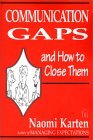 If you work with or live with other people you should read this book. It is filled with information on understanding how communication gaps happen, and practical advice for resolving commuunications issues with other people. Most of the advice seems obvious, yet it if often the obvious that one needs to be reminded of. Among the extremely practical bits of information in the book is are dicussions of communication models (so that you can understand why communication might break down), and a chapter on how to write Service Level Agreements.
Related books
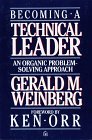 This book has lots of good information for technical people at all levels. This book even has some good work-style and problem solving ideas for non-technical people.
Related books
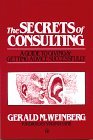 Everyone consults, according to Weinberg, and you'll find lots of useful stuff here, whether you are a full time employee, contract employee, or someone who is considering consulting.
Related books
 This book talks about how you can keep yourself focused on doing the right things. The text and examples are geared to consultants, but most everyone will find these "tools" useful.
Related books
 This book really made me think about my work, both day to day and career-wise. Covers practical approaches to improving culture, communication, and work environment. My favorite chapters were Avoiding Bad Working Environments and Working In a Poor Environment .
 An excellent resource on how to approach issues at work and at home. Should be required reading for everyone who is part of a team or a relationship.
Related books
 This is one of the "classic" books on negotiation, and still worth a read. This book is worth reading if you need to negotiate
anything(requirements, assignments, schedules) as part of your job. It also has some insights that will help in personal relationships.
This is one of the "classic" books on negotiation, and still worth a read. This book is worth reading if you need to negotiate
anything(requirements, assignments, schedules) as part of your job. It also has some insights that will help in personal relationships.Related books
 This book builds on Getting to Yes . If you find yourself in having trouble making headway in negitiation situations, it is worth a read. But read Getting to Yes first.
Related books
 An easy to read, entertaining book that illustrates quite clearly what some people never really learn: you need to know what the problem is before looking for a solution.